
Looking for manhole covers and frames? Alphatek supplies manhole covers and frames in stainless steel (SS 304/316), aluminium, ductile iron and GRP, with custom sizes, for contractors in Dubai and across the UAE.
A good manhole cover can still fail if the frame is set badly. Most complaints we hear about covers that rock, crack the tiles around them, sit proud of the floor or let smells into a building come down to installation, not the cover itself.
This guide walks through how a manhole cover frame is normally installed on a UAE site, and the mistakes that cause problems later. Always follow the project drawings, the specification and the consultant’s instructions; this is a practical checklist, not a replacement for them.
Before you start
- Check the cover against the chamber. Measure the chamber opening and compare it with the clear opening and overall frame size of the cover. Sort out any difference now, not after the screed is down.
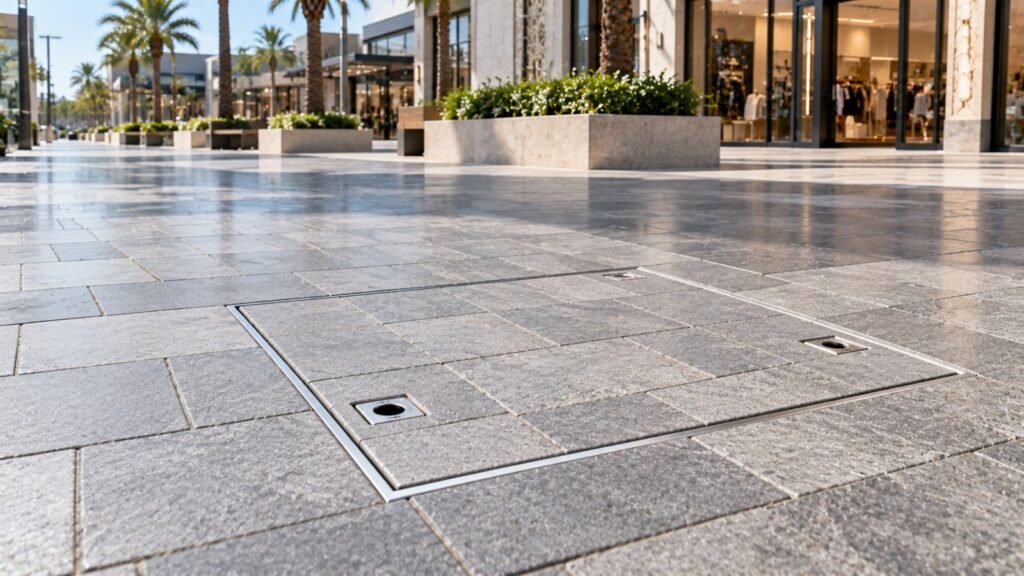
- Check the finished floor level. The frame must finish flush with the final floor, tile or paving, not with the slab or the screed. Get the finished level from the architectural drawings and mark it on site.
- Check the cover type. Recessed (tile-in) covers need the tray depth to match the floor finish. Solid-top and grating covers need the right orientation if the drawing shows one.
- Keep the cover in the frame. Set the frame with the cover seated in it, so the frame cannot twist or bow while it is bedded.
Step-by-step: setting the frame
- Prepare the chamber top. Clean the top of the chamber wall or slab, remove loose concrete and dust, and dampen it if a cement mortar bed will be used.
- Bed the frame. Place the frame on a full, even bed of mortar or the bedding material in the specification, so the flange is supported all the way round. Point loads on a few packers are the main cause of rocking covers and cracked frames.
- Level and align. Bring the frame to the finished floor level, check it is level in both directions (or follows the floor fall, if the floor slopes) and square to walls, joints or tile lines.
- Haunch the outside. Build up mortar or concrete around the outside of the frame flange so the frame cannot move sideways. On trafficked areas, follow the haunching detail on the drawings.
- Let it cure. Keep traffic off the cover until the bedding and haunching have cured. On roads, ramps and service yards this matters most.
- Finish the floor. Lay the tile, stone or paving up to the frame. For recessed covers, fill the tray with the matching finish, bedded at the same level as the floor around it.
- Clean and check. Remove mortar from the seating faces and lifting points, then lift the cover and reseat it to check it sits firmly without rocking.
Common installation mistakes
| Mistake | What happens later |
|---|---|
| Frame set on a few packers | The cover rocks, makes noise under traffic and the frame can crack |
| Frame set to slab level | Cover sits low and collects water, or the floor has to be ramped up to it |
| Recess tray depth not matched to the tile | Infill tiles sit high or low and crack at the edges |
| Mortar left on seating faces | Cover never sits flat and rocks from day one |
| Traffic before curing | Frame moves and has to be broken out and reset |
| Indoor chamber with an unsealed cover | Drain smells in basements, kitchens and corridors |
Indoor covers and odour
Inside buildings, a manhole cover over a foul drainage chamber should seal properly, otherwise drain smells escape. Choose a cover with a seal for these locations, keep the seal and seating faces clean during installation, and make sure the cover is fully seated after each opening. Recessed stainless steel covers in SS 316 are a common choice for kitchens, basements and wet areas. See our guide to choosing a manhole cover material for more.
After handover
Mark cover positions on the as-built drawings, especially recessed covers that are hard to spot once tiled. Give the facilities team the lifting keys, and check heavy-traffic covers after the first few weeks of use. A cover that starts to rock early is easier to fix before the frame breaks up.
Frequently asked questions
Should a manhole cover be flush with the floor?
Yes. The frame and cover should finish flush with the final floor, tile or paving level. A cover that sits proud is a trip hazard, and one that sits low collects water and dirt.
Why does a new manhole cover rock?
Usually because the frame is not evenly bedded, mortar or debris is left on the seating faces, or the frame has twisted during installation. Re-bedding the frame on a full mortar bed normally fixes it.
How long before traffic can drive over a new manhole cover?
Only after the bedding and haunching have cured. The time depends on the material used and the site conditions, so follow the specification and the consultant’s instructions.
How do I install a recessed tile-in manhole cover?
Set the frame flush with the finished floor level, then fill the tray with the same tile or stone as the floor, bedded so its surface matches the floor around it. The tray depth must suit the thickness of the finish.
Do indoor manhole covers need a seal?
Covers over foul drainage chambers inside buildings should seal properly to stop drain smells. Choose a sealed cover for basements, kitchens and other indoor areas.
Need covers and frames for your project?
Send us the clear openings, cover type, material, floor finish and quantities, and we will reply with options and a price for Dubai and the rest of the UAE. Request a quote, call or WhatsApp Justin Varghese on +971 54 466 7243, or email sales@alphatek.ae.
More in Manhole Covers
Multi-Part Manhole Covers – Dubai, UAE · Water Tank Access Covers – Dubai, UAE