
Looking for catch basins, gullies or sand traps? Alphatek supplies GRP and stainless steel catch basins, GRP gully traps and sediment buckets and sediment interceptors (sand traps) for car parks, yards, podiums and landscaped areas in Dubai and across the UAE.
Sand is the biggest enemy of drainage in the UAE. Wind-blown sand, site dust and grit from car parks end up in the drains, settle in the pipes and cause blockages and flooding. Three fittings are used to stop it, and their names are often mixed up on drawings and site orders: the catch basin, the gully trap and the sand trap.
This guide explains what each one does, where each one is used and how to choose.
Quick answer
| Catch basin | Gully trap | Sand trap (sediment interceptor) | |
|---|---|---|---|
| Main job | Collects surface water through a grating and lets silt settle in a bucket or sump | Collects water and holds a water seal; a bucket catches debris | Slows the water so sand, silt and grit settle out before the drain |
| Size | Small pit | Small fitting | Larger chamber |
| Water seal | Not always | Yes | Depends on the design |
| Typical places | Car parks, podiums, plazas, landscaped areas, service yards | Yards, basements, car parks, around buildings | Wash bays, car washes, service yards, car park ramps, wash-down areas |
| Maintenance | Empty the bucket regularly | Empty the bucket, keep the seal topped up | Remove the collected sediment regularly |
What is a catch basin?
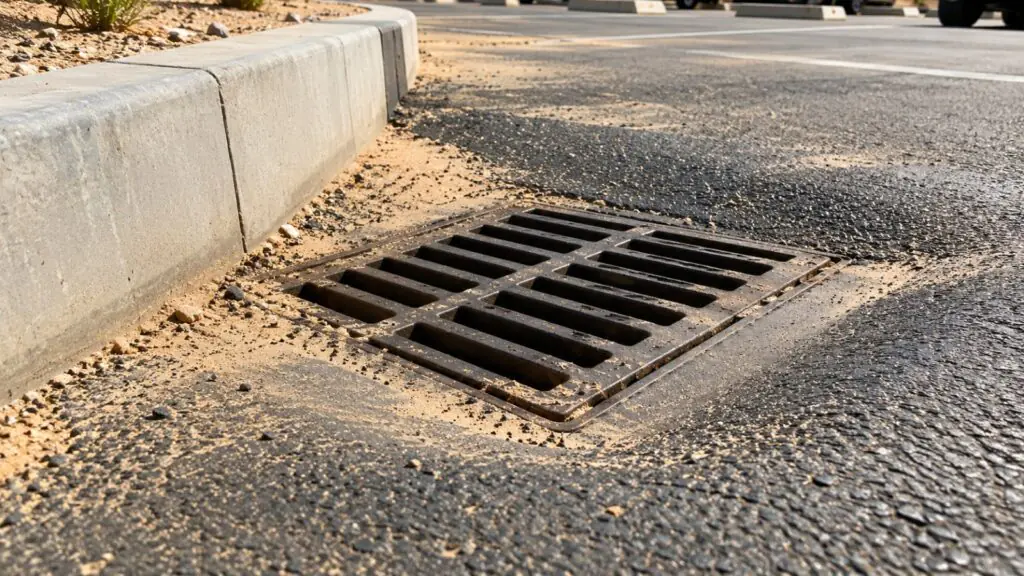
A catch basin is a small pit with a grating on top. Rainwater, wash-down water and irrigation run-off drop through the grating, sand and leaves settle in a removable bucket or in the sump at the bottom, and the cleaner water flows on into the drain pipe. Catch basins are used across open areas: car parks, podiums, plazas, landscaped areas and service yards. Alphatek supplies catch basins in GRP and in stainless steel SS 304/316, with sediment buckets and gratings.
What is a gully trap?
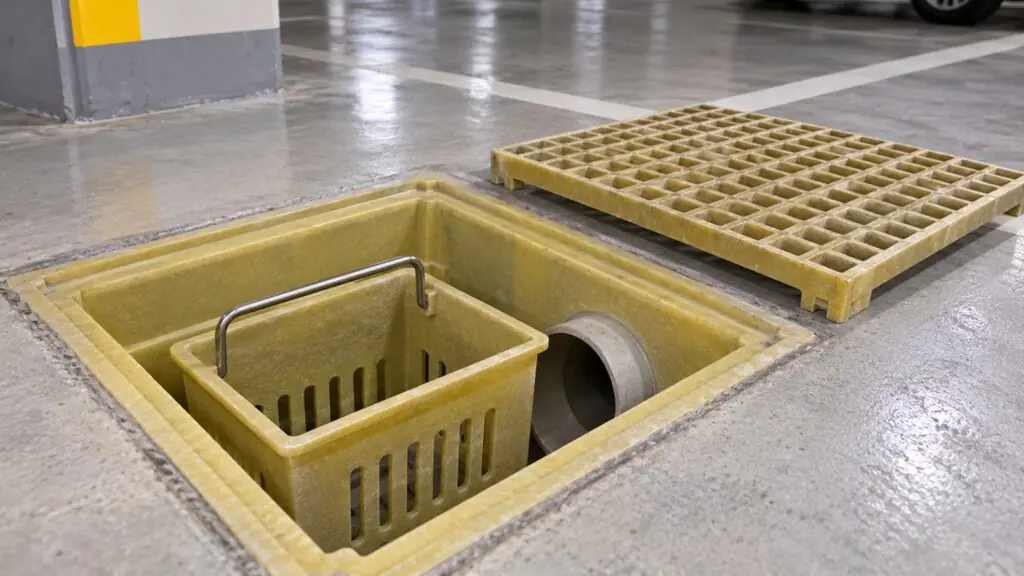
A gully trap is a trapped fitting: it holds a water seal that stops smells coming back out of the drain, and it usually has a bucket that catches leaves and debris before they reach the pipe. Yard gullies and floor gullies are used around buildings, in basements, car parks and service areas. Our guide to gully traps vs floor traps explains the water seal in more detail, and our GRP gully traps come with removable sediment buckets.
What is a sand trap?
A sand trap, also called a sediment interceptor or silt trap, is a larger chamber built to deal with a lot of sand and grit. It slows the water down so that sand, silt and grit settle out before the water leaves through the outlet. The sediment collects in the bottom of the chamber or in a basket, where it can be lifted out. Sand traps are used where a lot of grit is washed into the drains: vehicle wash bays and car washes, service and loading yards, equipment wash-down areas and car park ramps. See our sediment interceptors.
Where oil and fuel are also present, such as workshops and fuel areas, an oil interceptor is used as well; see oil interceptors for car parks and workshops.
How to choose
- Mostly rainwater and run-off from open areas: catch basins with sediment buckets.
- Drainage around buildings where smells must be kept out: gully traps.
- Heavy sand and grit, especially from washing vehicles or yards: a sand trap (sediment interceptor) before the drain line.
- Oil or fuel present: add an oil interceptor.
Many UAE sites use more than one: catch basins and gullies across the site, and a sand trap or interceptor before the water leaves a wash bay or ramp. The drainage drawing shows which fitting goes where.
Maintenance matters more than the fitting
All three only work if the collected sand is removed. A full bucket or a full sand trap behaves like no trap at all, and the sand goes straight into the pipes. Check and empty buckets and chambers regularly, more often after sandstorms and in dusty areas, and keep gully water seals topped up in dry months.
Frequently asked questions
What is the difference between a catch basin and a gully trap?
A catch basin is a small pit with a grating that collects surface water and lets silt settle in a bucket or sump. A gully trap is a trapped fitting that holds a water seal to stop smells, usually with a bucket for debris.
What is a sand trap in drainage?
A sand trap, also called a sediment interceptor or silt trap, is a chamber that slows water down so sand, silt and grit settle out before the water enters the drain line.
Where are sand traps needed?
In vehicle wash bays, car washes, service and loading yards, equipment wash-down areas and car park ramps, where a lot of sand and grit is washed into the drains.
Is a catch basin the same as a sand trap?
No. A catch basin is a small pit that catches some silt in a bucket. A sand trap is a larger chamber designed to settle out large amounts of sand and grit.
How often should catch basins and sand traps be cleaned?
Regularly, depending on how much sand reaches them, and always after sandstorms. A full bucket or chamber lets sand pass into the pipes and cause blockages.
Need catch basins, gullies or sand traps?
Send us the drainage drawing or a list of fitting types, sizes and quantities, and we will reply with options and a price for Dubai and the rest of the UAE. Request a quote, call or WhatsApp Justin Varghese on +971 54 466 7243, or email sales@alphatek.ae.
More in Floor Traps, Gullies & Cleanouts
Drainage Accessories · Sediment Interceptors in Dubai & the UAE · Floor Cleanouts · Stainless Steel Floor Cleanout · Floor Cleanout Covers: Screw-Down or Recessed Tile-In?