
Looking for a supplier? Alphatek is a floor drain supplier in Dubai and the UAE: stainless steel 304/316 floor drains, floor traps, gullies and linear drains.
Most floor drain problems in UAE buildings, such as leaks into the flat below, water pooling away from the grate or smells, start on the day the drain was installed. The drain itself is simple. What matters is the height, the falls, the connection to the pipe and, above all, the joint between the drain and the waterproofing.
This guide follows the order of work on a typical bathroom, balcony or plant room floor.
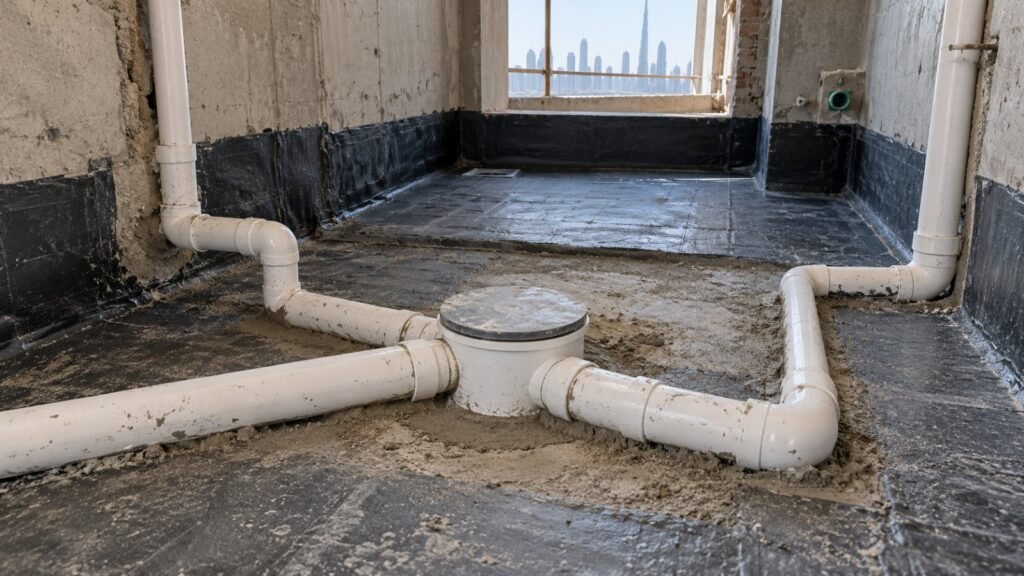
Before you start
- Check the drawing for the drain position, outlet size and whether a trap is built into the drain or fitted separately
- Confirm the finished floor level and tile thickness, so the grate ends up flush with the tiles
- Pick the right material: stainless steel 304 for indoor bathrooms, 316 for balconies, pool areas and sites near the sea (see 304 vs 316)
- Make sure the drain has a flange or clamping ring that the waterproofing membrane can bond to
Step-by-step installation
1. Set out the position and falls
Mark the drain centre and work out the falls from the furthest corner of the area to the drain. The designer sets the exact gradient. A gentle, even fall is better than a steep one, because tiles lay flat and water still runs to the grate.
2. Connect the outlet
Connect the drain body or trap to the waste pipe with the correct fitting. Keep the body level and square to the tile grid, then support it so it cannot move while concrete or screed is placed around it.
3. Fix the height
Set the top of the body so that, after screed, adhesive and tile, the grate sits flush with or just below the finished tile. Adjustable-height drains make this easier on thick or uneven floors.
4. Bond the waterproofing
This is the step that stops leaks. Lay the membrane into the drain flange or under the clamping ring so water on the membrane drains into the body, not around it. Seal the joint as the membrane maker specifies.
5. Flood test
Plug the outlet, flood the area and leave it for the time set in the project specification. Check the ceiling below for damp before any tiles go down.
6. Screed and tile
Lay the screed to falls, then tile from the drain outwards so cuts sit at the edges of the room. Keep adhesive out of the drain and the trap.
7. Fit the grate and fill the trap
Fit the grate and any hair basket, then pour water in to fill the water seal before handover.

Common mistakes to avoid
| Mistake | What happens |
|---|---|
| Grate set too high | Water ponds around the drain and tiles stay wet |
| Membrane stopped short of the flange | Water runs under the drain and leaks to the floor below |
| No flood test | Leaks are found after tiling, when repairs cost far more |
| Shallow trap in a rarely used room | The water seal dries out and the drain smells |
| Adhesive or grout in the drain | Slow drainage and early blockages |
If a drain already smells, see floor drain smell: causes and fixes.
Related products: Stainless steel floor cleanouts and plumbing accessories from Alphatek, available across Dubai and the UAE.
Frequently asked questions
How high should a floor drain be set?
Set the drain body so that the grate finishes flush with the tile or one to two millimetres below it once screed, adhesive and tiles are laid. Water should run into the grate, not around it.
Do I need a flood test before tiling?
Yes. A flood test on the waterproofing before tiling is the cheapest way to find leaks around the drain. The project specification sets how long the test runs.
Which floor drain is best for a balcony in Dubai?
A stainless steel 316 drain with a flange for the waterproofing is a good choice for balconies, because it handles sun, salt air and cleaning chemicals. Balconies also need enough outlet size for heavy rain.
Can I replace a floor drain without breaking the floor?
Often you can replace the grate, hair basket or top part. Replacing the full body usually means cutting out tiles and redoing the waterproofing around the drain.
What size floor drain outlet do I need?
Common outlets are 50 mm and 75 mm for bathrooms and 100 mm or more for plant rooms, kitchens and wet areas with heavy flow. Follow the size on the drainage drawing.
Need floor drains for your project?
Send us the drawing or the outlet size, finish and quantity. We supply floor drains across Dubai, Abu Dhabi, Sharjah and the rest of the UAE. Not sure which drain fits? Try the floor drain finder, request a quote or email sales@alphatek.ae.
Products in this guide